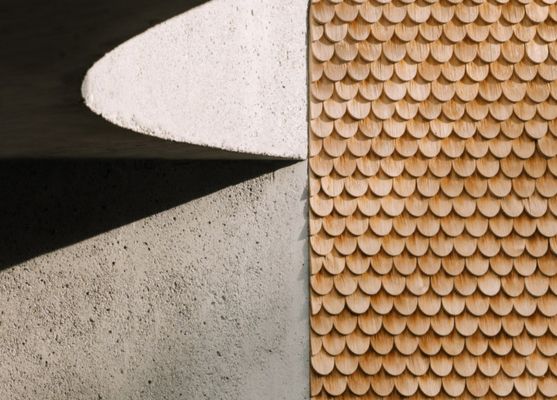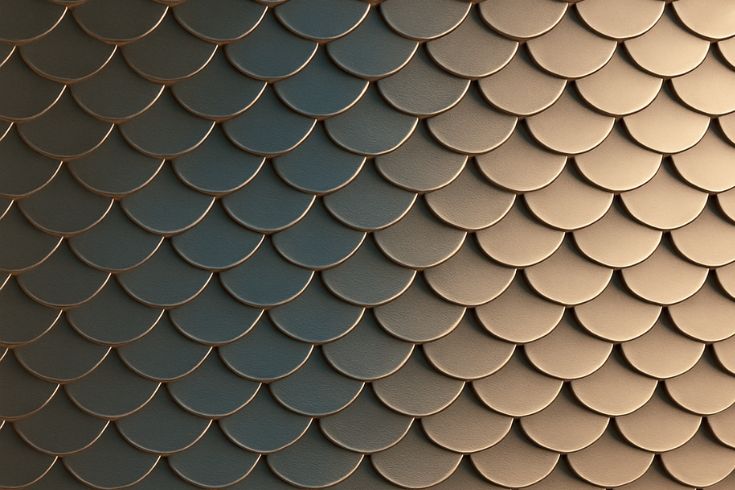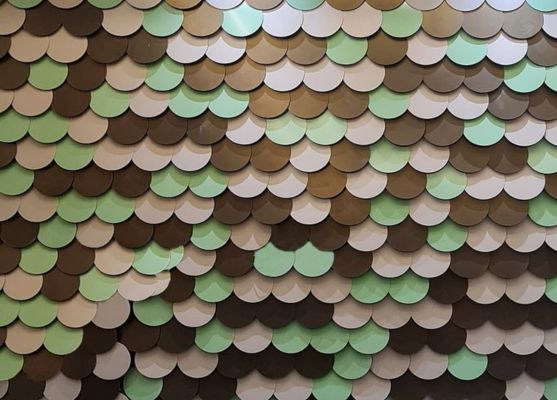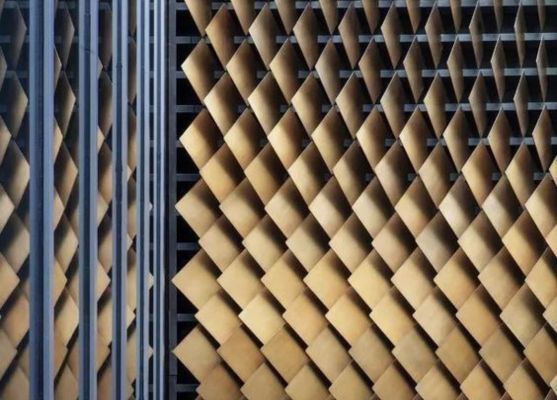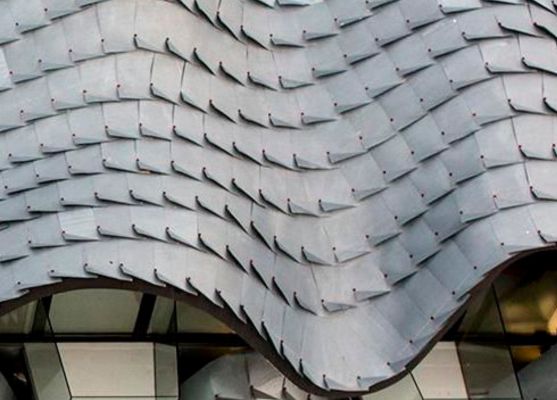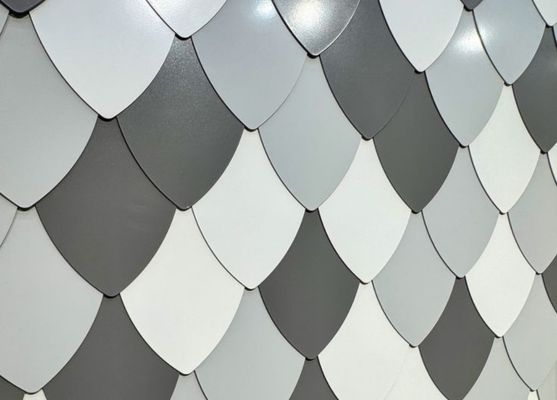
A shingle facade is wall cladding made of small, flat metal tiles ("shingles") laid in overlapping, staggered rows — similar to roof shingles but on the walls. Each row overlaps the one below so rain runs off, while the repeating tile edges create a fine, crafted texture with natural variation.
Aluminium 5052-H32 · Copper · Zinc-look PVDF
Aluminium Top-Hat Rail · Ventilated Cavity
Concealed Clip & Interlock · A4 Stainless
Staggered · Stack · Diagonal · Mixed-Width
IS 875 Part 3 — project-specific certification
Shop drawings + engineer cert. — no extra cost
Tile-by-tile courses give a warm, artisan texture that flat panels cannot match.
Each course overlaps the one below, so water runs off the face during monsoon rains.
Blend two or three tones for a weathered, organic look — or keep one finish for calm uniformity.
Small tiles can be replaced locally without removing large areas of cladding.
Aluminium top-hat rails are fixed over the wall, leaving a ventilated cavity.
Shingles are laid from the bottom up, each course overlapping and interlocking with the one below.
Corners, edges and openings are closed with matching trims for a clean finish.
Classic offset joints, like traditional shingles.
Aligned joints for a modern grid look.
Tiles set on the diagonal for a scaled texture.
Random widths for an organic, handmade feel.
Shingles are flat tiles laid tightly in overlapping courses to form a weather-shedding wall. Sequins are small plates hung on a grid as a decorative, often see-through screen that shimmers.
Yes. Shingles can run continuously from wall to roof, which suits pitched-roof villas, gables and towers.
Natural copper darkens to brown and, over many years and depending on climate, can develop a green patina. If you want a stable colour, choose a copper-look PVDF finish on aluminium.
The overlap sheds most rain, and the ventilated cavity lets any moisture drain and dry. A weather-resistant layer on the wall behind adds protection.
No. The ventilated cavity behind the shingles allows air to move and carry heat away. Light colours reflect more sun.
Our facade specialists respond within one business day with a cost estimate and initial direction.
WhatsApp us