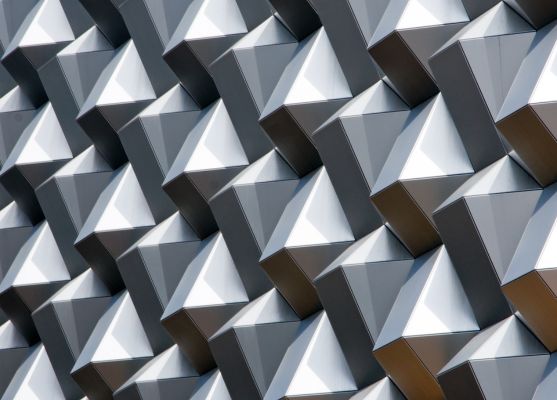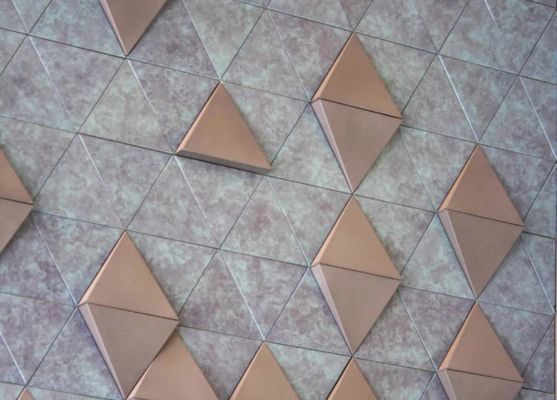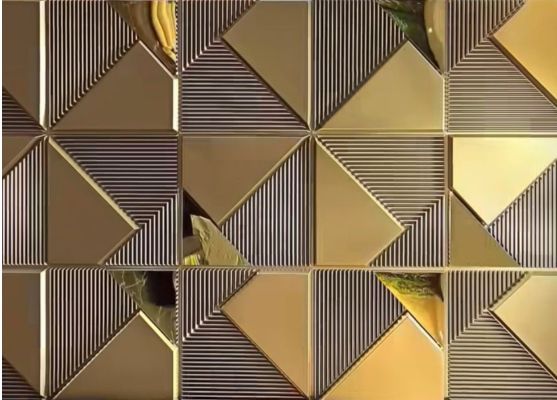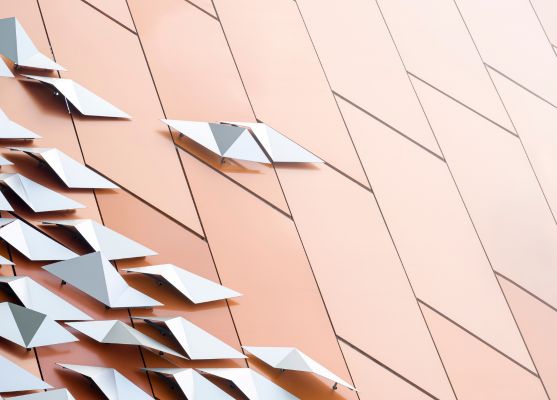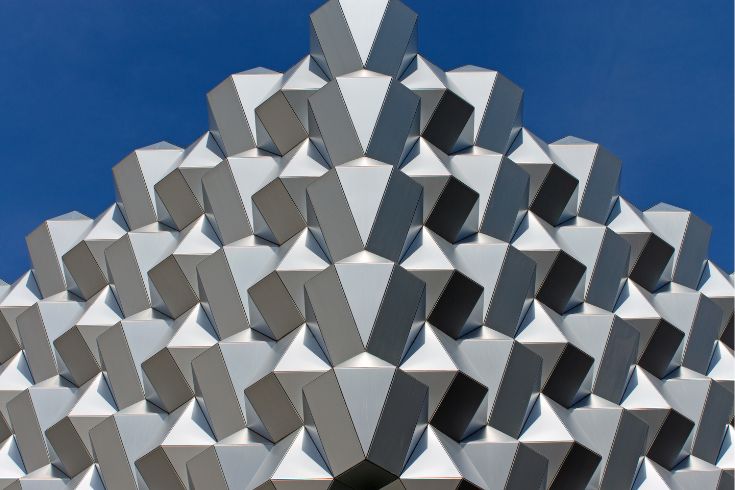
A pyramid facade is cladding made of metal panels folded into repeating pyramid shapes, each with four sloping faces. Because every face points in a different direction, the surface shows several tones of light and shadow at once — creating a crisp, faceted 3D texture that changes with the sun and the viewer's position.
Aluminium 5052-H32 · Stainless Steel 304
Extruded Aluminium Channel System
A4 Stainless Self-Drill · Concealed
Uniform · Gradient Height · Rotated · Custom
IS 875 Part 3 — project-specific certification
Shop drawings + engineer cert. — no extra cost
Each face meets the sun at a different angle, so a single colour reads as four shades.
Facets scatter light rather than mirror it, giving shimmer without blinding reflections.
Vary pyramid height across the wall to create fades and waves with one finish.
The folded form makes each module rigid, keeping panels flat-edged and dent-resistant.
We define module size, pyramid height and any rotation or gradient across the elevation.
Sheets are CNC-cut and press-folded into precise pyramid modules, then finished.
Modules are fixed to a concealed aluminium channel grid with tight, aligned joints.
Equal modules for a regular, crystalline texture.
Pyramids rise and flatten across the wall.
Modules turned to shift light direction.
Flat-topped facets for a softer, modern look.
Pyramid modules have four sloping faces meeting at a point, so they create sharp facets of light. Blox modules are rectangular boxes projecting at different depths, so they create blocky relief and deep shadows.
Yes. Gradually raising or flattening the pyramids creates a fade or wave effect, even in a single colour.
Mirror finishes can reflect strongly at certain angles. Because facets scatter light, glare is reduced compared with flat mirror panels, and we review orientation and neighbouring buildings before recommending mirror finishes.
Yes. They are popular for lobby walls, reception backdrops and ceilings, often in lighter gauges.
Apexes are formed by folding and sealed, and the faceted shape is stiff. At ground level near footfall, we recommend lower pyramid heights or truncated tops.
Our facade specialists respond within one business day with a cost estimate and initial direction.
WhatsApp us